
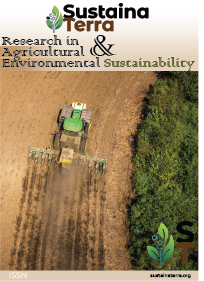
SustainaTerra is a peer-reviewed, double-blind, open-access academic journal dedicated to advancing knowledge and innovation in earth sciences. Our mission is to publish high-quality, original research that contributes significantly to the scientific and professional community. We cover a broad range of topics including but not limited to Sustainable Agriculture and Food Systems, Biodiversity Conservation and Natural Resource Management, and Environnement and Climate change mitigation and adaptation. The journal welcomes contributions from researchers, practitioners, and scholars from around the world. Our editorial team is composed of internationally recognized experts committed to maintaining the highest standards of academic integrity, transparency, and peer review.
1. Sustainable Agriculture and Food Systems
Overview: This section of SustainaTerra focuses on the integration of sustainability principles into agricultural practices and food systems. It explores innovative and traditional farming methods that increase productivity while safeguarding environmental, social, and economic sustainability.
Scope and Topics: We invite research that addresses systemic transformations in agricultural production and food distribution, with an emphasis on long-term resilience, equity, and ecological harmony. Submissions should aim to demonstrate how agriculture can feed the growing global population without degrading the land, water, and biodiversity on which it depends.
Key Areas include:
- Agroecology and permaculture: Studies that emphasize ecological principles applied to farming systems, including biodiversity-based strategies, closed-loop systems, and co-design with farmers.
- Regenerative and conservation agriculture: Research on practices that restore soil and plant health, increase carbon sequestration, and enhance ecosystem services.
- Climate-smart agriculture (CSA): Integration of adaptation, mitigation, and productivity strategies in agricultural systems.
- Agri-food policy and governance: Critical analysis of policy frameworks and institutional arrangements that support sustainable food systems.
- Food sovereignty and access: Research on local control over food production, equitable distribution, and access to nutritious foods, especially in marginalized communities.
- Supply chain sustainability: Studies on reducing waste, improving traceability, shortening supply chains, and fostering local food economies.
- Technology and innovation in farming: Precision agriculture, digital platforms, AI in agronomy, and mechanization adapted to smallholder contexts.
- Urban and peri-urban agriculture: Role of city-based agriculture in food security, waste recycling, and community resilience.
- This section welcomes interdisciplinary research, meta-analyses, policy reviews, case studies, and participatory action research that collectively advance the understanding and practice of sustainability in agriculture and food systems.
2. Biodiversity Conservation and Natural Resource Management
Overview: This section addresses the urgent need to conserve biological diversity and sustainably manage natural resources in the face of accelerating anthropogenic pressures. It focuses on both terrestrial and aquatic ecosystems and spans from molecular to landscape-level
Scope and Topics: Submissions should explore the dynamics between human societies and biodiversity, emphasizing integrated approaches that reconcile conservation with socio-economic development. The section values both applied and theoretical research, particularly where it informs conservation action, restoration, or governance.
Key Areas include:
- Ecosystem-based management: Research on holistic strategies that consider ecological functions and services in land, forest, and marine management.
- Landscape ecology: Study of spatial patterns and ecological processes across heterogeneous landscapes to understand how landscape structure affects biodiversity, ecosystem functions, and human-environment interactions.
- Protected areas and conservation planning: Optimization of reserve design, effectiveness assessments, and community-inclusive governance models.
- Species conservation and restoration ecology: In-situ and ex-situ conservation strategies, endangered species recovery, and ecosystem rehabilitation.
- Community-based natural resource management (CBNRM): Participatory approaches where local people are central to managing forests, water, wildlife, and fisheries.
- Genetic diversity and conservation genetics: Population genetics studies that inform conservation priorities and evolutionary potential of species.
- Biodiversity and livelihoods: Studies that demonstrate the value of biodiversity for food security, medicine, cultural identity, and poverty alleviation.
- Payment for ecosystem services (PES) and incentive-based conservation mechanisms.
- Conflict, conservation, and human-wildlife interactions: Research addressing socio-political dimensions of conservation conflicts and coexistence strategies.
3. Environment and Climate Change Mitigation and Adaptation
Overview:This section focuses on the science and practice of environmental protection and climate resilience. It welcomes contributions that explore how communities, governments, and industries can respond to environmental degradation and the multifaceted challenges of climate change.
Scope and Topics:Submissions should address mitigation of greenhouse gas emissions, adaptation strategies for vulnerable systems, and innovations that lead to a more sustainable interaction between humans and the environment. The section aims to bridge research and policy, and values interdisciplinary contributions.
Key Areas include:
- Climate modeling and risk assessment: Projections, vulnerability mapping, and early warning systems that inform policy and action.
- Renewable energy and decarbonization: Innovations in solar, wind, bioenergy, and energy efficiency; transitions to low-carbon economies.
- Nature-based solutions (NbS): Use of natural systems (forests, wetlands, mangroves) for carbon storage, flood control, and heat regulation.
- Urban climate resilience: Adaptation strategies for cities, including green infrastructure, sustainable transport, and energy-efficient buildings.
- Water resource management: Integrated watershed management, drought resilience, pollution control, and sustainable sanitation.
- Circular economy and waste management: Reducing waste through recycling, upcycling, and industrial ecology approaches.
- Environmental justice and climate equity: Addressing the unequal burdens of environmental degradation and climate change on marginalized communities.
- Policy instruments and climate governance: Evaluation of carbon pricing, emissions trading, climate finance, and international agreements.
| About | ISSN (online) — ISSN (print) — DOI — Publishing model Open Access |
|---|---|
| Early Access | No |